
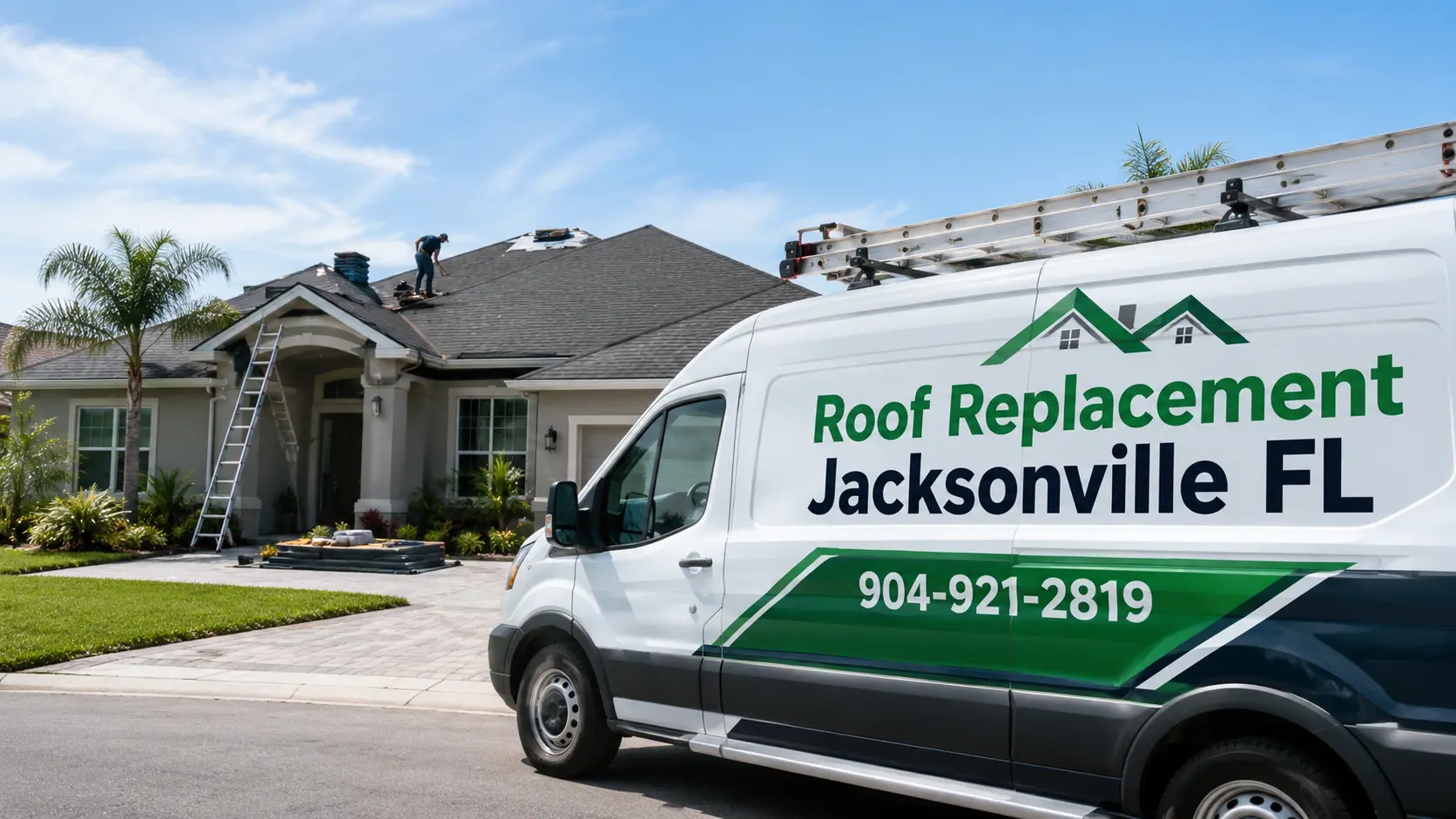
Northeast Florida Roof Replacement
Roof Replacement Jacksonville FL
Get a straightforward estimate for your roof replacement project.
Why Homeowners Choose Us
A straightforward roof replacement process built around clear communication, practical roofing options, and service throughout Jacksonville and surrounding Northeast Florida communities.
Roof Replacement Focused
We specialize in complete roof replacement rather than trying to be a general home-service company. Our site and process are built around helping property owners evaluate and replace aging roofing systems.
Multiple Roofing Options
We help property owners explore asphalt shingle, metal, tile, flat, and commercial roofing options based on the needs of the property.
Clear Estimate Process
Request an estimate and receive clear information about the roof, potential replacement needs, available materials, and the next steps before work begins.
Jacksonville Area Service
We serve Jacksonville and surrounding Northeast Florida communities including St. Johns, Nocatee, Ponte Vedra Beach, Orange Park, Fleming Island, and the Beaches.
Property Protection
Roof replacement planning should account for landscaping, driveways, siding, windows, outdoor areas, and cleanup throughout the project.
Complete Roofing System Approach
Replacement involves more than new shingles. The process can include tear-off, decking evaluation, underlayment, flashing, ventilation, roofing material installation, and final cleanup.
Residential & Commercial
Roof replacement services are available for residential properties as well as appropriate commercial and low-slope roofing projects.
Easy to Get Started
Property owners can call 904-921-2819 or submit the online estimate form to begin discussing their roof replacement needs.
Roof replacement guidance and estimates for homes and businesses across Northeast Florida.
Planning a full roof replacement in Northeast Florida
A roof in Florida works harder than one almost anywhere else in the country. Intense summer UV, long stretches of heavy rain, and the chance of a tropical system rolling through in late summer all wear on shingles, underlayment, and flashing year after year. When a roof starts showing its age, patch repairs can only stretch the clock so far before a full replacement becomes the more practical option.
Roof Replacement Jacksonville FL helps property owners across Florida think through that decision. We look at the age and condition of the existing roof, the type of decking underneath, ventilation, and how the home or building has weathered previous storm seasons, then lay out replacement options in plain terms. That includes material choice, expected labor scope, and a realistic estimate range before any work is scheduled.
Whether the property is a single-family home in a coastal neighborhood or a commercial building further inland, the goal is the same: a roof system that is properly installed for Florida's climate and sized to the structure it protects. We work across shingle, metal, tile, and flat roofing, matching material and installation approach to the building rather than pushing a one-size answer.
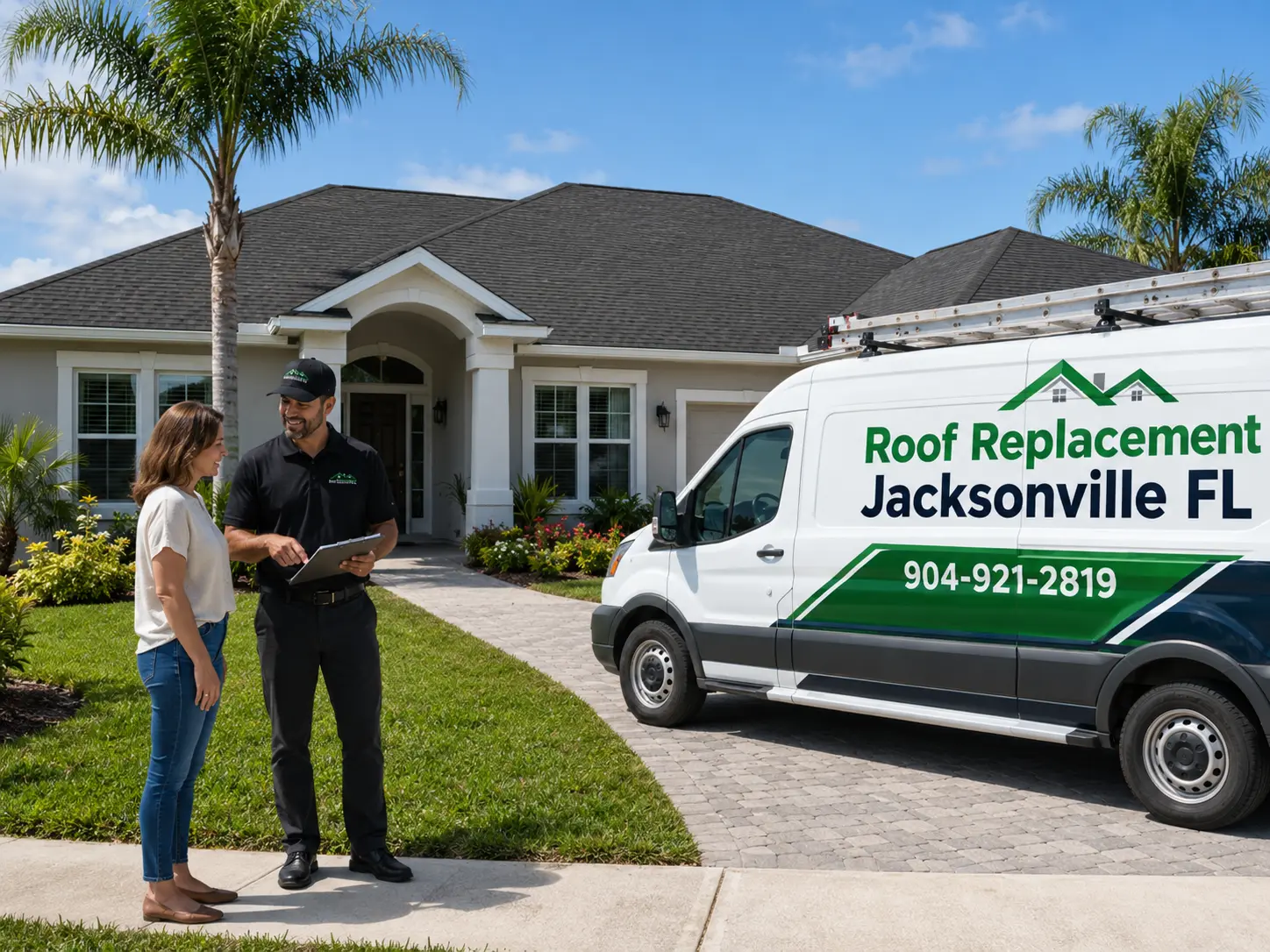
Core Services
Shingle, Metal, Tile, Flat and Commercial Replacement
Roof replacement covers more than tearing off old shingles. It includes decking inspection, underlayment selection, flashing detail work around chimneys and vents, and a material choice that fits the home's structure and budget. We handle full replacements for asphalt shingle, metal, tile, and flat/low-slope roofing, as well as larger commercial roof replacement projects. Each material has its own installation sequence, expected lifespan in Florida's climate, and cost range, which we walk through during the estimate.
Roof Replacement
Roof Replacement
Full tear-off roof replacement for Jacksonville-area homes and businesses, from decking repairs through final cleanup.
View service →Roofing Systems
Asphalt Shingle Roof Replacement
Architectural and 3-tab asphalt shingle replacement built for Jacksonville sun, heat, and wind-driven rain.
View service →Roofing Systems
Metal Roof Replacement
Standing seam and exposed-fastener metal roof replacement for Jacksonville homes facing salt air, heat, and heavy rain.
View service →Roofing Systems
Tile Roof Replacement
Concrete and clay tile roof replacement in Jacksonville, from full tear-offs to lift-and-relay underlayment work.
View service →Flat & Commercial
Flat Roof Replacement
Low-slope membrane replacement for Jacksonville-area homes, built to handle ponding water, seams, and Florida storms.
View service →Flat & Commercial
Commercial Roof Replacement
Commercial and light-industrial roof replacement in the Jacksonville area, planned around your building's operating schedule.
View service →Roof Replacement
Full residential roof replacement in Jacksonville and Northeast Florida, from tear-off and decking inspection through the finished roofing system.
Roofing Systems
Asphalt shingle, standing seam and exposed-fastener metal, and concrete or clay tile replacement for Florida sun, rain and wind exposure.
Flat & Commercial
Low-slope and flat roof replacement for homes with flat sections, plus commercial roof replacement for Jacksonville-area buildings.
Planning tool
Roof Replacement Cost Calculator Jacksonville FL
Use this calculator to get a rough planning range for roof replacement based on approximate roof size, roofing material, pitch, tear-off requirements, and project complexity. It is a starting point for homeowners asking how much does a new roof cost in Jacksonville — not a quote.
Estimated Roof Replacement Range
$18,200 – $28,300
This calculator provides a general planning estimate only. Actual roof replacement cost depends on precise roof measurements, roofing material, pitch, tear-off requirements, decking condition, flashing, ventilation, access, permits, and project complexity. An on-site roof assessment is required for accurate pricing.
What Affects Roof Replacement Cost in Jacksonville?
No two roofs price the same way, which is why answers to “how much does roof replacement cost” vary so widely. These are the variables that move a new roof cost in Jacksonville FL up or down:
- Roof size. Pricing follows roof surface area, which is always larger than interior living space.
- Roofing material. asphalt shingle roofing sits at the accessible end, while metal roofing and tile roofing carry higher material and labor costs.
- Pitch. Steeper roofs add surface area plus slower, safer installation methods.
- Roof complexity. Valleys, hips, dormers and multiple roof sections add cut waste and detail labor.
- Tear-off. Removing and disposing of the old roof — especially heavy tile or layered shingles — is its own line item.
- Decking repairs. Soft or rotted sheathing is only visible after tear-off and is replaced by the sheet.
- Flashing. Wall, valley, chimney and penetration flashing is replaced with the roof rather than reused.
- Ventilation. Ridge vents, intake and attic airflow corrections affect both cost and roof lifespan.
- Skylights and chimneys. Every penetration needs new detailing, and skylights are often replaced at the same time.
- Access. Tight lots, two- and three-story elevations, and limited staging space slow material handling.
- Storm damage. Storm damage roof replacement in Jacksonville FL often involves documentation, hidden decking damage and additional detail repair.
- Location. Coastal wind exposure and permit requirements differ across our service areas.
For a measured number instead of a range, see roof replacement or request a free estimate.
Decision tool
Should I Repair or Replace My Roof?
Answer a few questions about your roof’s age, condition, leaks, and repair history to see whether a repair may be reasonable or whether replacement deserves consideration.
Your result
Repair may be reasonable
Based on your answers, the issue looks limited and isolated on an otherwise serviceable roof. A localized problem such as a single flashing detail or a small number of damaged shingles can sometimes be repaired rather than replaced, provided the underlying deck and surrounding materials are still sound. A professional assessment confirms whether the surrounding roof still has usable service life.
Repair may be reasonable
A limited, isolated issue — one flashing detail, a handful of wind-lifted shingles — on an otherwise serviceable roof can sometimes be repaired.
Roof inspection recommended
Roof age, recurring leaks, or several damage indicators together make an inspection important before you decide how to spend money on the roof.
Replacement may be more cost-effective
Widespread wear, multiple leaks, repeated repairs, advanced age, structural concerns or extensive storm damage may make replacement worth evaluating.
Signs It May Be Time to Replace Your Roof
Homeowners usually ask when should a roof be replaced only after something goes wrong. These are the patterns that shift the conversation from repair to replacement — and they also answer the related question of how old is too old for a roof.
- Recurring leaks. Water returning in the same place after a repair usually means the system, not the patch, is failing.
- Widespread shingle wear. Curling, cracking and brittleness across whole slopes rather than one corner.
- Missing or damaged shingles. Repeated blow-offs signal weakened sealant strips across the roof.
- Repeated repairs. Several service calls in a couple of years often exceed the cost of replacing.
- Significant granule loss. Granules in gutters mean the shingle surface is losing its UV protection.
- Sagging areas. Dips or waves point to decking or structural issues that need prompt professional evaluation.
- Storm damage. Wind, hail and debris impacts can compromise large areas at once.
- Advanced roof age. Florida sun, heat and humidity shorten typical service life.
- Multiple failure points. Flashing, vents, valleys and field shingles all showing wear at the same time.
Not sure which applies to your home? Talk it through on the contact page or review all roofing services.
Storm & Aging Roofs
Repairs No Longer Holding?
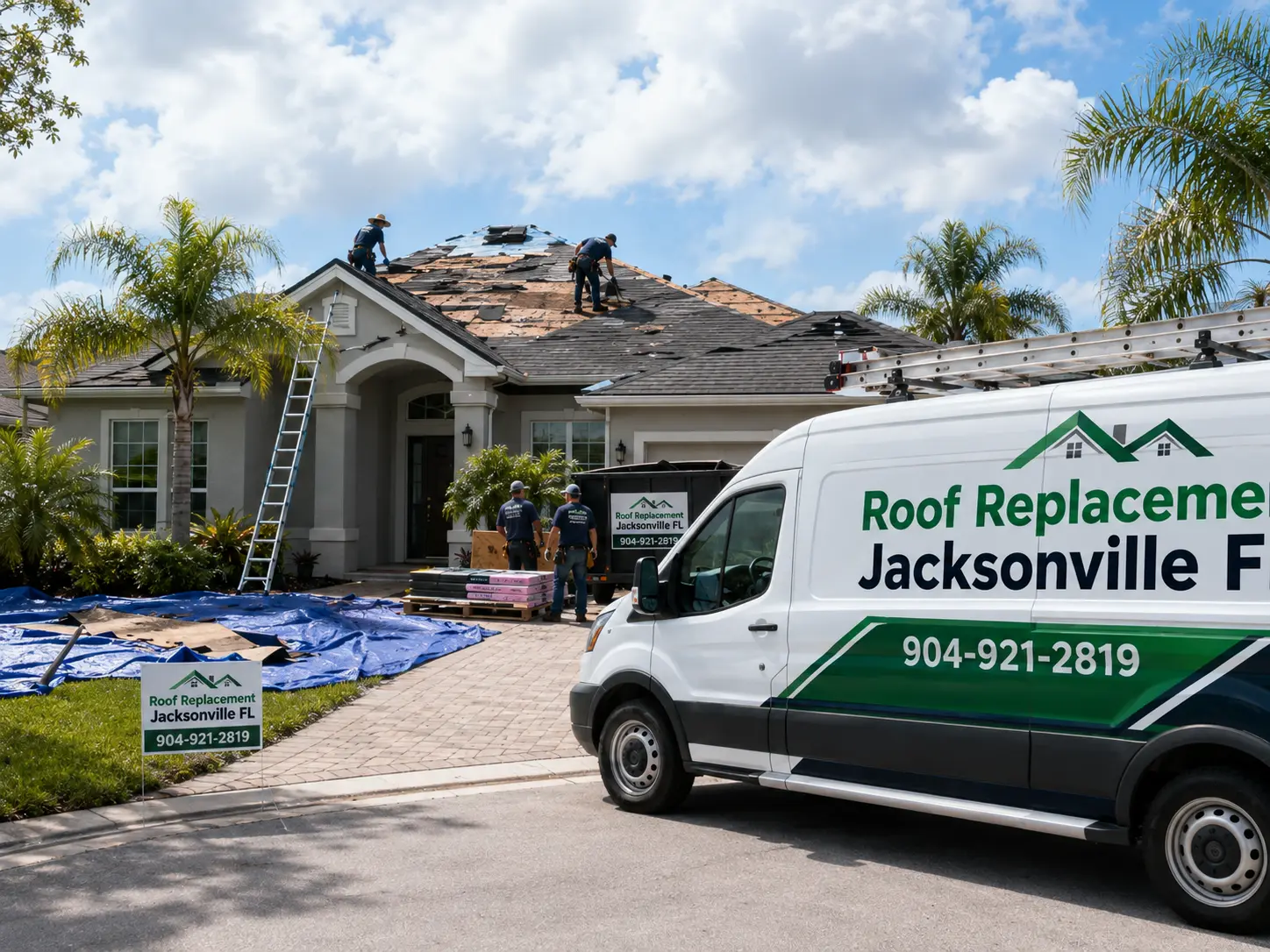
Not every roof replacement starts with a storm. Many begin with a roof simply reaching the end of its practical life — curling or missing shingles, granule loss showing up in gutters, soft spots in the decking, or persistent small leaks that repairs no longer fully resolve. Once a roof passes a certain age, especially after several hurricane seasons of wind and rain exposure, replacement becomes more cost-effective than continuing to chase individual repairs.
Storm damage can accelerate that timeline. Wind-driven rain, lifted or torn shingles, and impact damage from debris can turn a roof that had a few years left into one that needs replacing sooner. After a significant storm, it's worth having the roof looked at even if there's no visible interior leak yet, since underlayment and decking damage aren't always obvious from the ground.
Why Homeowners Call Us
Replacement-Focused, Start to Finish
Estimates done on-site
An estimator visits the property to look at the actual roof condition rather than pricing from a phone description alone.
Material options explained
Shingle, metal, tile, and flat roofing are each covered with their trade-offs so the homeowner can decide with real information.
Florida-specific installation practices
Underlayment, flashing, and ventilation choices reflect the region's UV exposure, heavy rain, and storm season rather than generic specs.
Service-area flexibility
Without a fixed office to maintain, scheduling can adapt to the property location across all 14 communities we cover.
Scope broken down clearly
Cost estimates separate tear-off, decking repair, materials, and labor so it's clear what's driving the total.
Commercial and residential coverage
From single-family homes to larger commercial roof replacement, the same on-site evaluation process applies.
Service Area
Where We Work
Roof Replacement Jacksonville FL covers 14 communities across Florida, from urban Jacksonville neighborhoods to beach towns like Jacksonville Beach and Ponte Vedra Beach, inland suburbs including Orange Park, Middleburg, and Fleming Island, and the areas north toward Yulee and Fernandina Beach near the Georgia line.
Roofing conditions shift across that footprint. Coastal properties in Atlantic Beach or Neptune Beach deal with salt air and wind exposure that call for corrosion-resistant fasteners and flashing, while inland communities like St. Johns, Fruit Cove, Mandarin, and Nocatee see more sustained UV exposure and afternoon thunderstorm runoff. Estimates account for these local factors rather than treating the whole region the same way.
About
Local knowledge, service-area coverage
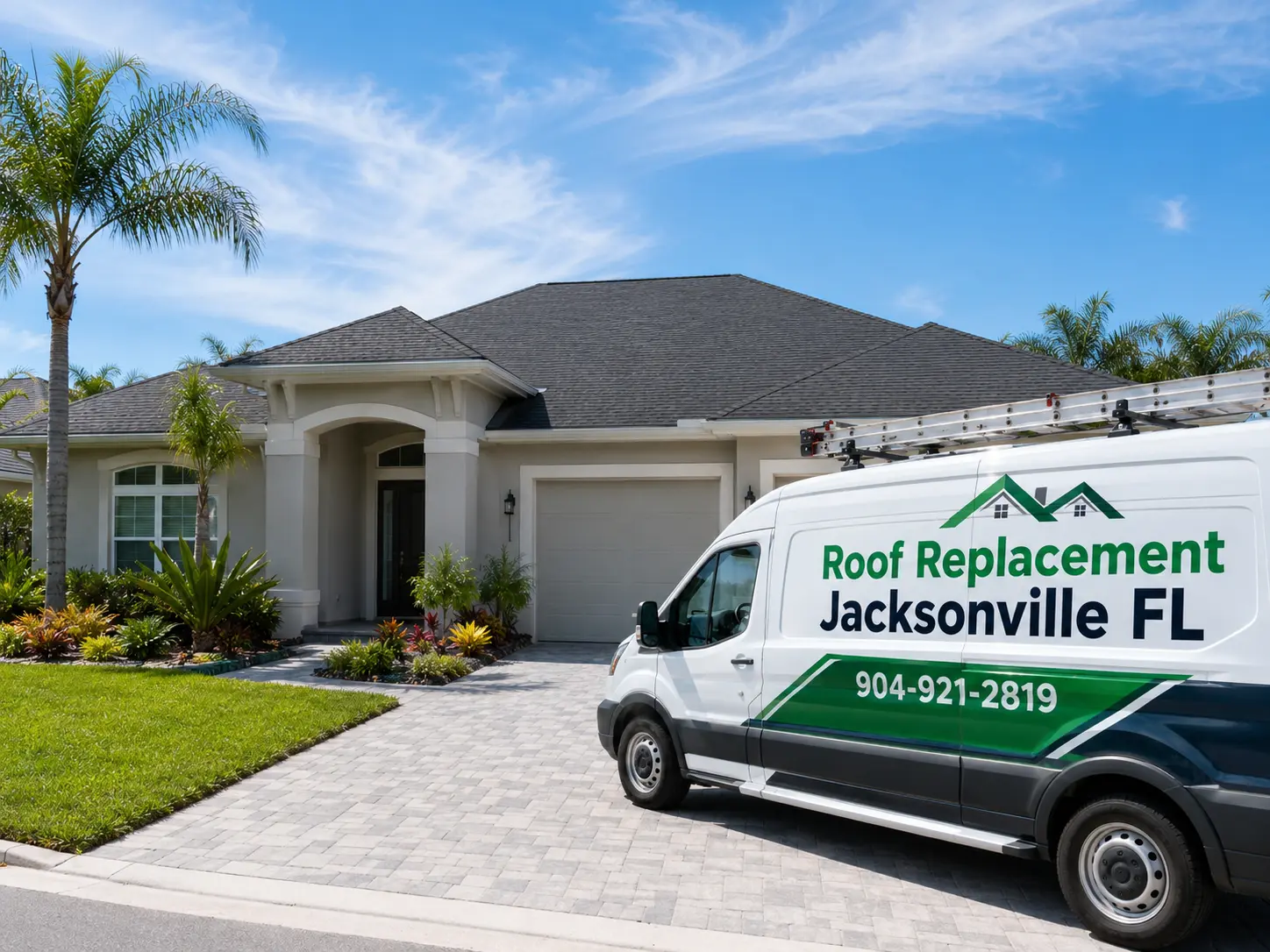
Roof Replacement Jacksonville FL is organized as a service-area business covering Jacksonville and the surrounding Florida communities. There is no walk-in storefront or staffed office to visit; instead, estimates and site visits happen at the property itself, which keeps overhead down and scheduling flexible for homeowners.
That structure means the focus stays on the roof in front of us rather than on maintaining a retail location. Estimators travel to the address, walk the roof or review it from a ladder and drone imagery where appropriate, and put together a scope that reflects what the decking, flashing, and ventilation actually need.
Because the coverage area spans beach communities, riverfront neighborhoods, and inland suburbs, the approach to each replacement varies. A tile roof near the coast has different salt-air and fastening considerations than a shingle roof in a inland subdivision, and estimates reflect those differences rather than a generic price sheet.
Jacksonville Roof Replacement Guide
A city built on one of the widest rivers in the state
Jacksonville spreads across both banks of the St. Johns River, and that geography shapes what roofs go through here. Homes in Riverside and Avondale often sit under mature oak canopies that drop leaves and pollen into valleys and gutters, while newer construction out toward the Southside and Northside sits in open subdivisions that take the full force of summer sun with almost no shade relief. Downtown-adjacent neighborhoods mix century-old bungalows with mid-century additions, so the roofs we're asked about range from steep-slope dimensional shingle to low-slope additions tacked onto older frames.
That variety means there isn't one right roof for Jacksonville. A 1930s Craftsman in San Marco with a tall, ventilated attic behaves differently under a July thunderstorm than a 1990s ranch on the Northside with a shallow pitch and builder-grade shingles. What ties every one of these homes together is the same set of stresses: intense UV exposure for most of the year, sudden heavy downpours that test valleys and flashing, and long stretches of humidity that give algae and moss a foothold on north-facing slopes.
Wind-driven rain during summer storms and the occasional tropical system is also a real factor for this part of Northeast Florida. Roofs that look fine from the ground can have underlayment that's degraded from heat cycling or flashing around chimneys and dormers that has quietly opened up over the years. Because Jacksonville's housing stock spans so many decades, age of the roof deck and the condition of the decking underneath the shingles or tile matters as much as the surface material when we're evaluating whether a full replacement makes sense.
We work with homeowners across the full span of Jacksonville's neighborhoods to look at slope, ventilation, decking condition, and material options, then lay out what a replacement actually involves before any work starts.
Neighborhood by neighborhood, the roofing needs shift
In Riverside and Avondale, tree cover and older framing are the dominant factors. In San Marco, a similar mix of historic and infill homes means checking whether additions were tied properly into the original roof line. Out toward the Southside, subdivisions built from the 1970s through the 2000s often have simpler roof geometry but larger, sun-exposed surface areas that put more stress on shingle granules over a 15-20 year span. Northside neighborhoods vary widely, with some newer builder communities and some older ranch-style homes that may be due for a second or third re-roof.
What Florida sun does to a Jacksonville roof over time
Jacksonville sees well over 200 sunny days a year, and UV exposure breaks down asphalt shingle oils faster than in cooler climates, leading to granule loss and brittleness well before a shingle's rated lifespan on paper. South- and west-facing slopes typically show wear first. Metal roofing and higher-grade shingle products with reflective granules can reduce some of this heat load, which is worth discussing if your current roof runs hot.
Heavy rain, valleys, and flashing
Valleys
Where two roof slopes meet, water concentrates fast during Jacksonville's summer downpours, so valley flashing and underlayment need to be in good shape.
Chimney and wall flashing
Older homes especially can have flashing that has separated slightly from years of thermal expansion and contraction.
Gutters and downspouts
Overwhelmed gutters during a fast-moving storm can back water up under shingle edges if not sized or cleared properly.
Tropical systems and wind-driven rain
Northeast Florida doesn't take direct hurricane hits every year, but tropical storms and the outer bands of hurricanes bring sustained wind-driven rain that finds any existing weak point in a roof system. A roof that has a few lifted shingles or aging pipe boot seals may hold up fine in ordinary rain but let water in once wind pushes rain sideways under the shingle edge. This is one of the most common reasons Jacksonville homeowners discover a leak only after a named storm passes through.
How a roof replacement project typically proceeds
Most roof replacements follow a similar sequence, even though the details shift by material. It starts with an on-site evaluation where the existing roof is inspected for decking condition, flashing, ventilation, and the extent of wear or damage. That inspection informs the estimate and the material recommendation.
1. Evaluation
An estimator inspects the roof, checks decking and flashing, and documents problem areas before pricing anything.
2. Material selection
Shingle, metal, tile, or flat roofing options are compared against budget, home style, and expected lifespan.
3. Scheduling
Once the scope and price are agreed on, the tear-off and installation dates are set, factoring in weather windows.
4. Tear-off
The old roofing material is removed down to the decking, which is inspected and repaired or replaced as needed.
5. Underlayment and flashing
New underlayment and flashing are installed around penetrations, valleys, and edges before the finish material goes on.
6. Installation
The new roofing system is installed according to the manufacturer's application requirements for the chosen material.
7. Cleanup and walk-through
Debris and old materials are cleared from the property, and the finished roof is reviewed with the homeowner.
Comparing shingle, metal, tile, and flat roofing
Asphalt shingle remains the most common residential choice in Florida because of its lower upfront cost and wide availability of styles and colors. It performs well under Florida sun and rain when installed with proper underlayment and ventilation, though it generally has a shorter service life than metal or tile.
Metal roofing costs more upfront but tends to hold up well against wind and heavy rain, and it can be a good fit for homeowners planning to stay in a property long term. Tile roofing is common on Spanish and Mediterranean-style homes across the region and offers a distinct look, but it's heavier and requires a structure built to support that weight. Flat or low-slope roofing shows up mostly on additions, porches, and commercial buildings, where drainage design and membrane quality matter more than the finish material's appearance.
Signs a roof may be due for replacement
Shingle curling or cupping
Edges lifting away from the roof surface usually signal shingles nearing the end of their service life.
Granule loss
Finding large amounts of granules in gutters or downspouts often means shingles are wearing thin.
Visible sagging
Any dip or sag in the roofline can point to decking damage underneath and should be evaluated promptly.
Frequent or recurring leaks
When repairs address one leak and another appears elsewhere, the underlayment may be failing broadly.
Roof age
Roofs approaching or past their typical material lifespan are more prone to failure during storm season.
What affects roof replacement cost in Northeast Florida
Roof size and pitch are the starting point for any estimate — larger and steeper roofs require more material and labor time. Material choice makes a significant difference too, with shingle typically at the lower end of the range and tile or standing-seam metal at the higher end.
Decking condition can shift the price once tear-off begins, since damaged plywood or boards need to be replaced before new underlayment goes down. Roofline complexity, including valleys, dormers, chimneys, and skylights, adds labor and flashing work. Local permitting and disposal fees also factor into the final number, and all of these line items are broken out in the estimate rather than bundled into one figure.
FAQ
Common Roof Replacement Questions
How do I know if I need a full roof replacement or just a repair?
- It usually comes down to age, extent of damage, and how many separate problem areas exist. A roof with isolated damage on an otherwise sound structure may only need repair, while widespread granule loss, multiple leak points, or decking damage typically point toward replacement. An on-site look is the most reliable way to tell which situation applies to your roof.
What roofing materials do you install for replacements?
- We handle full replacement for asphalt shingle, metal, tile, and flat or low-slope roofing systems, plus larger commercial roof replacement projects. During the estimate we go over which materials suit the structure, the home's style, and the budget.
Do you have a physical office in Jacksonville I can visit?
- No. This is a service-area business, so there is no staffed office or storefront. Estimates and roof work happen at the property address, and scheduling is handled by phone or online.
How long does a typical roof replacement take?
- Most residential replacements take one to a few days depending on roof size, pitch, material, and weather. Tile and metal installations can take longer than a straightforward shingle tear-off and re-roof. Timing gets confirmed once the scope is finalized.
How is the cost of a roof replacement determined?
- Cost depends on roof size and pitch, the material chosen, how much decking needs to be repaired or replaced, and complexity of the roofline (valleys, chimneys, skylights). The estimate breaks these factors out individually rather than giving a single flat number.
Do you serve areas outside Jacksonville proper?
- Yes. We cover 14 communities across Florida, including St. Johns, Nocatee, Ponte Vedra Beach, Jacksonville Beach, Orange Park, Fleming Island, Middleburg, Yulee, Fernandina Beach, and more.
Can a roof replacement happen after storm damage?
- Yes, storm-damaged roofs are one of the more common reasons for replacement. It's worth having the roof evaluated after significant wind or rain events even without an obvious interior leak, since damage to decking or underlayment isn't always visible right away.
How do I get an estimate started?
- Call 904-921-2819 or submit a request online with your address and a bit of detail about the roof's condition. We'll follow up to schedule an on-site evaluation and walk through material and pricing options based on what we find.
How does the St. Johns River area affect my roof?
- Homes closer to the river and its tributaries tend to see higher ambient humidity, which can accelerate algae growth on shaded, north-facing roof slopes. It doesn't change the structural needs of the roof, but it does affect how streaking and moss show up over time.
Do older Jacksonville homes need special handling during replacement?
- Many older homes in areas like Riverside and Avondale have full board decking instead of plywood, and rafter spacing that differs from modern framing. We check decking condition and framing before quoting so there are no surprises once tear-off begins.
What roofing material makes sense for a shaded lot?
- On lots with heavy oak or pine canopy, algae-resistant shingles or metal roofing tend to hold their appearance longer than standard shingles. Attic ventilation also matters more on shaded roofs since less direct sun means slower drying after rain.
How long does a typical replacement take?
- Most single-family roof replacements in Jacksonville take one to three days depending on size, pitch, and material, with additional time if extensive decking repair is needed.
Can you replace just part of my roof?
- In some cases a partial replacement is appropriate, but mismatched shingle age and color, plus differing wear rates, often make a full replacement more practical long-term. We'll tell you honestly which situation you're in.
What about roofs with additions or multiple pitches?
- Homes with additions, like many in the older core neighborhoods, often have transitions between roof sections that are common trouble spots for leaks. We pay particular attention to these tie-in points and flashing during both inspection and replacement.
Find Us on Facebook
Follow our official Facebook page for recent roof replacement projects across Jacksonville and Northeast Florida, before-and-after photos, seasonal roofing tips and service updates.
Request an estimate for your roof replacement and we'll schedule an on-site evaluation.
Get a Free Roof Estimate